
Chasing the Tornado: Why Canada’s Future Can’t Wait

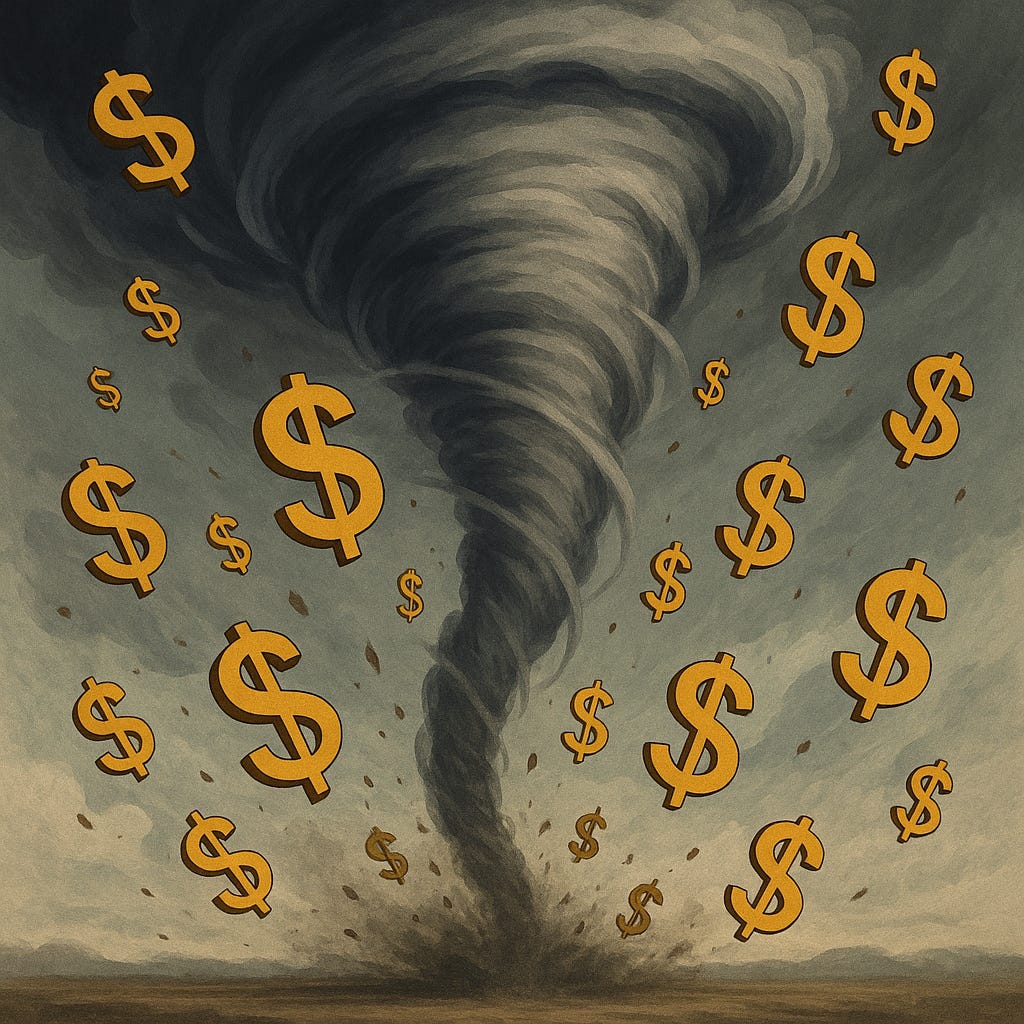
The United States has just slapped tariffs on Canada again. For many in our business community, it feels like déjà vu—a reminder that our southern neighbour will always look after its own interests first. The real question is: what are we going to do about it?
Are we waiting for the storm to pass? Are we hiding in the basement, hoping not to get blown away? Or are we chasing the tornado—harnessing its force to propel us forward?
Because make no mistake: we’re in a storm. And storms don’t politely wait until you’re ready.
Entrepreneurs Are Already Running Toward the Wind
Across Canada, entrepreneurs are building companies that are critical to our future sovereignty. They’re not wasting time wringing their hands about Washington’s latest tariff tantrum. They’re rolling up their sleeves and tackling the big stuff:
Securing our energy and mineral resources so we’re not at the mercy of foreign supply chains.
Protecting our data and communications so Canadians—not outsiders—control our digital future.
Strengthening healthcare, food security, and mobility so we can stand on our own two feet.
Defending our borders—physical and cyber—so we’re not reliant on others to keep us safe.
These entrepreneurs aren’t dreaming small. They’re building the foundations of a truly sovereign Canada. They’re chasing the tornado.
But Where’s the Capital?
Here’s the uncomfortable truth: too many of Canada’s capital providers—our pension funds, government and financial institutions, and family offices—are standing on the sidelines. They’re waiting for the storm to calm before stepping outside.
But here’s the irony: by the time the skies clear, the best opportunities will be gone. Our entrepreneurs will either be exhausted, acquired by foreign players, or worse, forced to move south where capital actually shows up.
Canada cannot afford to let its future sovereignty be decided by a lack of courage in its capital markets.
We Need a Team Canada Moment
Think back to 1972—Canada versus the Soviets, the Summit Series. No one expected us to win. But when push came to shove, Team Canada came together, put aside rivalries, and fought like hell to define our own destiny on the ice.
That’s the spirit we need today. Entrepreneurs and capital providers, shoulder to shoulder, chasing the storm together.
If you’re sitting on the sidelines with capital, ask yourself: do you want to be remembered as the one who waited safely in the shelter—or the one who helped rewrite the trajectory of this country?
The Path Forward
This isn’t about charity. It’s not about “doing the right thing” because it feels patriotic. It’s about opportunity. The tornado isn’t just destruction—it’s energy, it’s force, it’s momentum. And Canada’s entrepreneurs are already finding ways to harness it.
Capital providers should be doubling down in sectors where Canada’s sovereignty is at stake:
Energy & Minerals – Secure our critical resources before others lock them up.
Data & Communications – Ensure Canadian control over our digital backbone.
Healthcare & Food Security – Build resilient systems so Canadians aren’t left vulnerable.
Mobility & Defense – Innovate in both physical and cyber spaces to keep Canada secure.
These are trillion-dollar markets in the making. Sitting on the sidelines isn’t conservative—it’s reckless.
Time to Chase the Storm
Tariffs will come and go. Politicians will bluster. Neighbours will posture. But Canada’s destiny isn’t defined by others—it’s defined by us.
The choice is simple:
Wait for the storm to pass and watch others seize the future.
Hide in the shelter and hope Canada doesn’t get left behind.
Or chase the tornado—back our entrepreneurs, build sovereign businesses, and shape our future together.
It’s time for Team Canada to step on the ice again. Let’s stop waiting. Stop hiding. And start chasing.
Because the future doesn’t wait—and neither should we.

Should anyone find this compelling enough to change their capital allocation decisions?
I'm not sure "elbows up" as an investment thesis is the most rational given Canada's structural problems which don't have any easy or likely solution (productivity, no political will to develop pipelines & resources, continued brain drain, capital flight, coming currency crisis from debt levels...).
Investing in Canada is a falling knife catching exercise until there is a viable and likely path to solving structural handicaps. No amount of throwing good money after bad will change that.